What Comes After Vibe Coding: The State of AI App Builders in 2026

Why the next generation of AI app builders isn’t trying to be magic — and why that’s the point.
The term “vibe coding” entered the bloodstream in early 2025, when Andrej Karpathy used it to describe the experience of writing software by typing what you want and watching it materialize. It captured a real shift. For the first time, a non-developer could open a tool, describe an idea, and have a working interface on screen in minutes. The demos were genuinely magical. The category that grew up around the term — Lovable, Bolt, Base44, v0 — moved very quickly, raised a lot of money, and put millions of new “builders” into the software economy.
It also collided with reality.
Spend any time in the founder communities that built on these tools last year and the same confessions keep appearing. The app worked in the demo. It broke on the third user. The auth got brittle the moment real accounts hit it. The database silently dropped rows. The bug nobody could reproduce was the one costing customers. There is a real, observable pattern across builder forums in 2025 and 2026 that the conversation has shifted from “look what I shipped this weekend” to “how do I keep this from falling over.”
That pattern is the test the first wave of AI app builders failed. Not the demo test. The production test.
The next generation is being built by teams who watched the vibe coding era happen and asked the only question that mattered: what comes after? The answer is not a slightly smarter prompt-to-prototype tool. It is a fundamentally different architecture, oriented around a different goal.
What Vibe Coding Got Right
Before diagnosing the failures, give the category credit. Vibe coding was not a fraud. It made three things genuinely better for the first time.
It collapsed the distance between idea and visible artifact. A founder who could not have built anything six months ago can now show a working screen to a customer the same day they had the idea. That is a real and durable shift. It does not go away.
It democratized initial momentum. The bar to start building dropped to typing a paragraph. People who had been blocked by the engineering hiring market, by the cost of a contract dev shop, or by their own lack of code experience could finally move. Initial momentum compounds in startups. Vibe coding gave a lot of people their first inch.
It rewired what designers and product people could do alone. The discipline of “I need to talk to engineering to see this” mostly evaporated. A PM can now iterate on flows by themselves at 11 p.m. on a Tuesday. The collaboration loop got faster for everyone left in the room.
These are not small wins. The next generation of tools inherits them. The question is what comes attached.
What Vibe Coding Got Wrong
The category quietly conflated two different products: a way to generate an app, and a way to ship one. Those are not the same thing, and the gap between them is where the production failures live.
A generator’s job is to take a prompt and emit something coherent enough to look like the thing. A shipper’s job is to take an idea and turn it into infrastructure that will survive a customer base, a security review, a schema change six months from now, and a team handoff to a new developer. Most of the first-wave tools optimized for the generator job. The shipper job was someone else’s problem — usually the user’s, and usually after they had already made promises to customers.
The architectural failures show up in predictable places. The generated code carries patterns the AI picked up from its training data without context for the specific application — fine for a prototype, brittle in production. The database schema is shaped to make the visible app work today, with no provision for the schema being something a team will need to evolve safely next quarter. The auth flow uses the path of least resistance to ship the demo, which is rarely the path that holds up under real usage. The “deploy” step ends at the visible app, not at the operational system around it: monitoring, logs, backups, rate limits, observability — all somebody else’s problem.
The deeper failure is harder to name. The first-wave tools start with the screen and work backward to the data model and infrastructure. That is the wrong direction. The screen is the most volatile part of an application. The data model and the API are the most load-bearing. Starting with the screen produces an architecture optimized for the part of the system that should be replaceable.
The Shape of What’s Coming Next
The post-vibe-coding tools are organized around a different first move: clarity before code.
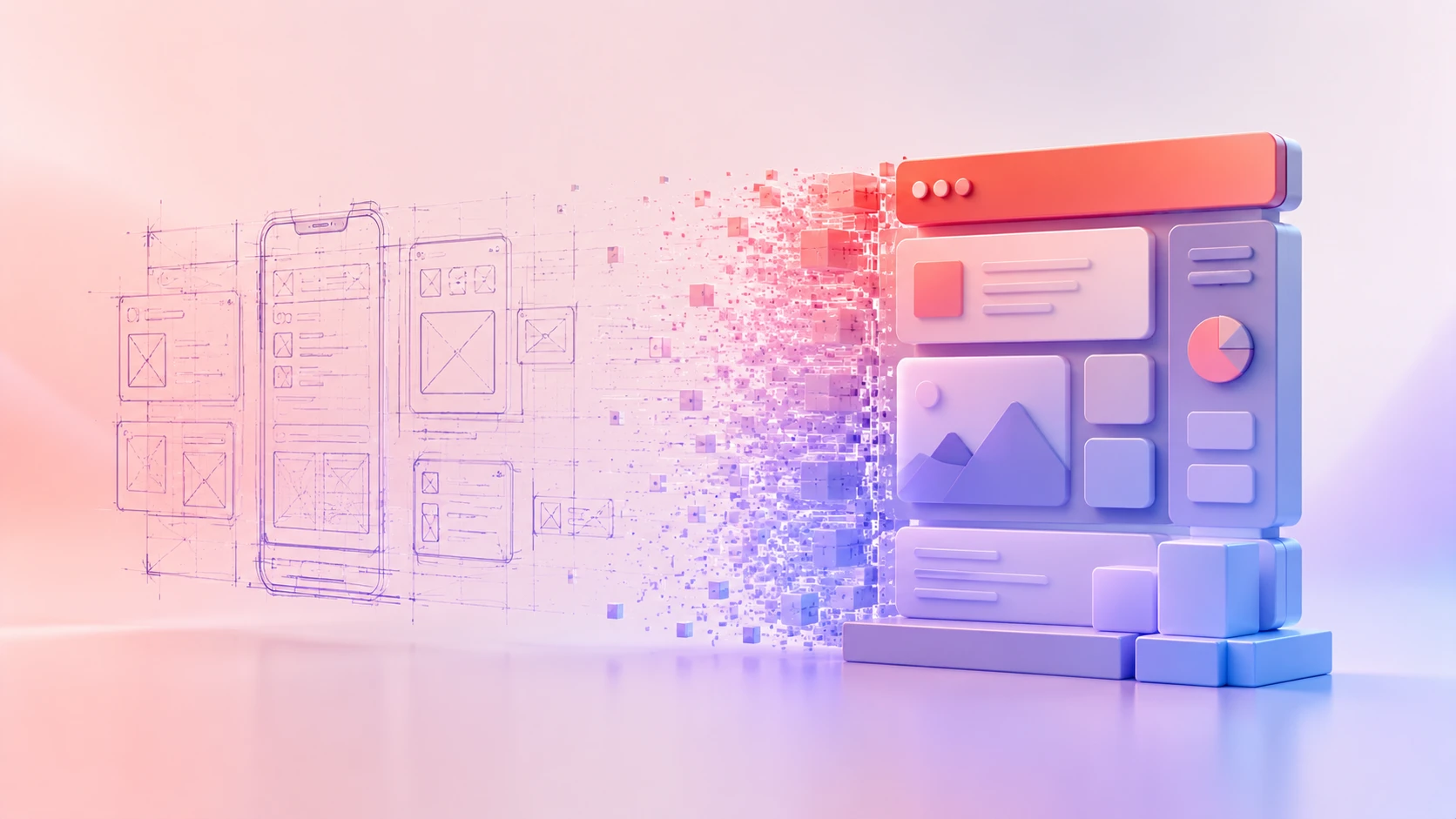
Instead of jumping from prompt to generated screens, the next generation starts with a structured blueprint — a description of the modules, user types, services, integrations, data model, and architecture the application needs. The blueprint is editable, inspectable, and reviewable. It is the contract for what is being built. Only after the blueprint is right does code generation begin, and the code is generated to satisfy the blueprint, not to satisfy whatever the AI happened to imagine.
This is the move Archie was built around. The product loop is idea → blueprint → edit → build. The blueprint phase is the part the first wave skipped, and it turns out to be the part that determines whether the application survives.
Three other shifts are happening in parallel.
The first is that the API stops being an afterthought. The generated application gets a proper, comprehensive, agent-ready API on day one. Not as documentation but as the spine. The argument for API-first architecture is independent of the AI builder conversation, but it lands hardest there: a generated app without a real API is a closed system that no other tool, integration, or agent can extend.
The second is that the backend joins the deliverable. The first wave generated frontends and pointed at someone else’s backend — usually Supabase or Firebase. The next wave includes the backend in the platform itself. Archie Core, for example, ships a GraphQL-first backend with every application; the customer does not glue Supabase to the frontend, then glue Vercel to that. The stack is one thing.
The third is that hosting and operational infrastructure stop being “your problem now.” Deployment, environments, observability, scaling, schema migrations — all included. The customer’s job is to describe the application; the platform’s job is to keep it running.
Put those three shifts together and you have something the first wave did not have: an application that can survive its own success.
Where the Players Sit Now
The market is still sorting itself. A rough taxonomy of where the major tools land in mid-2026:
| Tool | Primary job | Backend included | Hosting included | Production-ready output |
|---|---|---|---|---|
| Lovable | Frontend generation | No (BYO Supabase) | No (BYO Vercel/Netlify) | Prototype-grade |
| Bolt | Frontend generation in browser | No (BYO Supabase) | Partial (StackBlitz containers) | Prototype-grade |
| Base44 | Frontend + light backend generation | Partial (built-in data layer) | Partial | Prototype-grade |
| v0 | Component / UI generation | No | No | Component-grade |
| Cursor | AI coding assistant (developer tool) | N/A — coding tool | N/A — coding tool | Developer-mediated |
| Claude Code | AI coding assistant (developer tool) | N/A — coding tool | N/A — coding tool | Developer-mediated |
| Supabase | Backend-as-a-Service | Itself | Self-host or Supabase Cloud | Production-ready |
| Vercel | Frontend hosting + edge | No | Itself | Production-ready (hosting only) |
| Archie | Full-stack app from blueprint | Yes (Archie Core) | Yes (bundled) | Production-ready |
This is not an attack on any of these products. Each one is genuinely good at the job it was built for. Cursor and Claude Code, for example, are excellent developer tools — they are not in the same category as Lovable or Archie at all, because they assume a developer is in the loop. The point of the table is that the post-vibe-coding category is the one that includes everything in the right-most columns.
What Buyers Should Actually Evaluate
If a team is choosing an AI app builder in 2026, the questions worth asking are different from the ones they asked in 2024.
Does the tool produce a blueprint or only an artifact? If the answer is “you give it a prompt and it gives you screens,” it is a first-wave tool. That can still be the right choice for a weekend prototype, a sales-engineer demo, or a static site. It is the wrong choice for anything a customer will pay for.
Does the tool include the backend, or does it depend on another product? If the answer is “we work with Supabase / Firebase / etc.,” the customer is being handed a stack to assemble, not an application to run. That assembly cost is real and recurring.
Does the tool include hosting and operational infrastructure? “Connect your Vercel account” is fine for a developer. It is not fine for a non-technical founder, and it is definitely not fine when something breaks at 3 a.m. and the customer cannot find which dashboard to log into.
Does the application have a real API on day one, or is the API a future roadmap item? If agents will mediate a significant share of how software gets used in the next five years — and they will — an application without a real API is shipping into an empty channel.
Is the output something a developer would be willing to inherit? At some point, every successful application gets handed to a real engineering team. If the code, the schema, and the architecture cannot survive that handoff, the AI-generated start becomes a multi-quarter rewrite tax later.
The Bottom Line
Vibe coding was a real shift, not a fad. It put a generation of new builders into motion, and the muscle memory for “describe the app and see it” is not going back in the bottle. The next generation of AI app builders inherits that capability and adds the part the first wave skipped: an architecture that survives the moment the demo ends.
The teams that move on are not abandoning AI-generated software. They are doing it in the right order. Blueprint first, code second, screen third — the inverse of how the first wave operated, and the only order that produces an application instead of a prototype.
The category has a name now, even if the market hasn’t caught up. The companies building in it are the ones who watched the vibe coding era and understood, finally, that a working screen was never the same thing as a working system.
Related Reading
The diagnosis this piece builds on is vibe coding broke its promise. For the practice itself, see spec-driven development and the end of rewrites. Tool-by-tool: Lovable · Bolt · Base44 · Supabase · Vercel.
Related Reading
The full landscape, tool by tool: the best AI app builders in 2026. The practice the category converged on: spec-driven development.
Frequently Asked Questions
What does “what comes after vibe coding” mean? It refers to the next generation of AI app builders that produce production-ready applications rather than prototypes. The defining shift is starting with a structured blueprint — modules, user types, data model, integrations, architecture — before any code is generated, so the output is something an application can be built on, not just a visible artifact.
How is Archie different from Lovable, Bolt, or Base44? Archie includes a blueprint phase before code generation, ships a full backend (Archie Core) and hosting with every application, and produces an output designed to survive production use. The first-wave tools focus on frontend generation and depend on customers gluing in their own backend (typically Supabase) and hosting (typically Vercel or Netlify).
Is Cursor or Claude Code a competitor in this category? No. Cursor and Claude Code are developer tools — they assume a developer is in the loop writing and editing code. AI app builders like Archie, Lovable, and Bolt are aimed at users who are not writing code themselves. Different category, different audience.
Why does the blueprint phase matter so much? Because the screen is the most volatile part of any application, while the data model and API are the most load-bearing. Tools that start from the screen produce architectures optimized for the part of the system that should be replaceable, and brittle in the parts that should be stable. The blueprint phase forces the load-bearing decisions first.
Should I still use a first-wave tool for prototypes? For prototypes, demos, and weekend projects, the first-wave tools are still excellent at what they do. The argument is about which tool to use when the goal is something customers will pay for and the application will need to last. Different jobs, different tools.